Reflecting on Young People with Perinatally Acquired HIV in the US: Insights for Future Progress Over the Life Course
Dr Allison Agwu, Professor of Adult and Paediatric Infectious Diseases from the Johns Hopkins University School of Medicine joined us live from Baltimore, USA, for the 20th Annual Chiva Conference on Friday 13 March 2026.
Dr Agwu’s presentation began by reflecting on the Dandelions poem by Mary Bowman and shared how Mary had been instrumental in leading a movement of young adults who have grown up with HIV in the U.S. which became a powerful activist community, involving long-term survivors in the national HIV conference in the U.S. with their own conference programme tract.
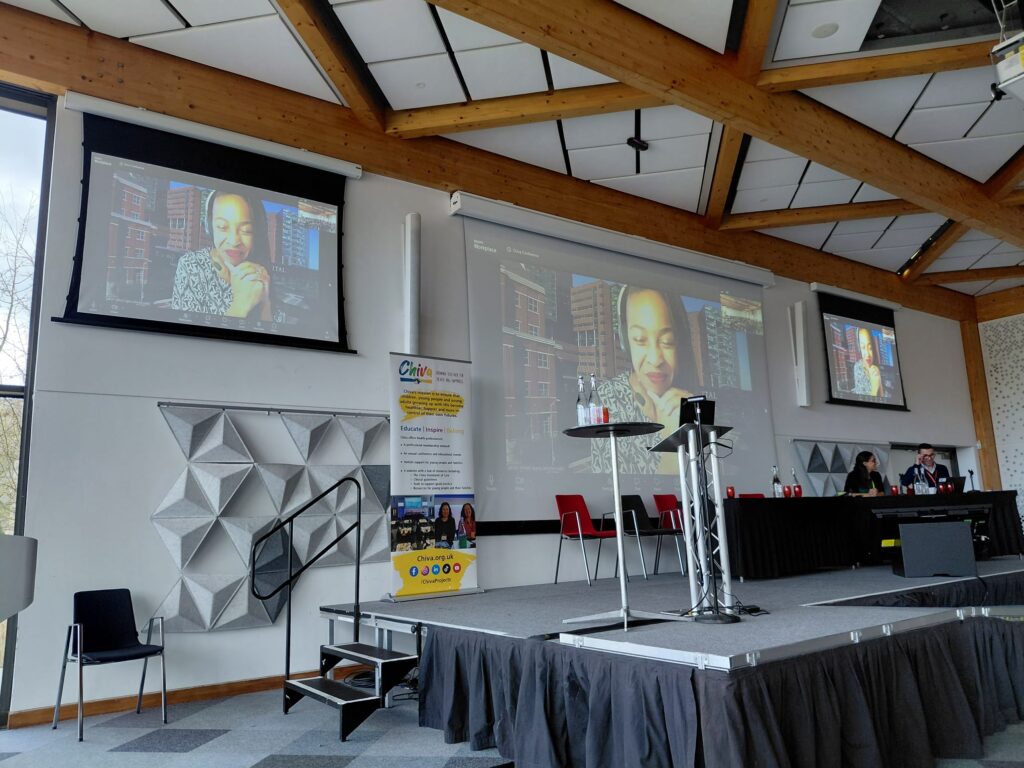
Dr Agwu highlighted the course of the epidemic in U.S. and key events. In 1982, the first paediatric HIV cases were reported and half later died. On reflection it became apparent that it was in 1977 when the first child was born, but was only later identified as being born with HIV.
The Ryan White Comprehensive AIDS Resources Emergency (CARE) Act was signed into law in 1990. This was a U.S federal programme providing HIV care, treatment, and support services to low-income, uninsured, and underinsured individuals.
ART regimens to treat HIV were developed over time, and demographics from 1975 – 2020 show a shift from nearly universal mortality to lifetime survivors. More latterly data has been more difficult to reliably capture due to changes at the CDC. There have been issues with late presentations for diagnosis and noted failure to deliver Post Exposure Prophylaxis (PEP), leading to acquisitions.
Black and Hispanic people are disproportionately affected by HIV in the US. Inequities are inherent, pointing to the ongoing race issues in America. These groups have worse outcomes and now there are restrictions on what can be shared in terms of LGBTQ communities which are facing discrimination and being associated with protests. Activism from lifetime survivors with strong leadership are addressing these inequities, but it’s important to recognise the ongoing challenges.
Dr Agwu highlighted the importance of recognising what it means to grow up with HIV, and taking a holistic approach. Mental health, high levels of trauma and substance misuse are all issues that need to be addressed in addition to clinical management. Identifying also the trauma associated with taking medicines which is a daily reminder of HIV. Adding in social context challenges, poverty, poor social determinants of health, presents a complex picture of need.
When we think about supporting adherence, we also need to consider if a person has safe housing, money for transport, and really pushing the envelope with treatment. Sometimes in her practice they are administering the treatments when available because they have to give injectable treatment prior to licensing when there are no other options due to long term treatment failure/adherence issues. Dr Agwu stressed that we need to be planning very well for the transition to adult HIV care for young people given all that is asked of them to stay engaged with care.
A lifecourse perspective requires us to be thinking ahead. Questions include: What happens in the fourth decade? What changes along the lifecourse in medical care? What happens with comorbidities? How might the impact of early HIV affect long-term morbidity and cure potential? Some data seems to show that those with perinatally acquired HIV have a longer life expectancy than adults with acquired HIV, but more work is needed to understand factors e.g. periods of not taking treatment or starting later. Dr Agwu stressed that this is a unique population of lifetime survivors and they need to be correctly identified as this in research studies.
The talk ended with a reflection on what is happening in U.S. currently, it was a sobering reminder that progress made can also be lost without ongoing funding and support.
The withdrawal of funding is impacting in the U.S. as well as abroad. With a pulling-back of treatment funding programmes and cutting back Medicaid funds. The Ryan White fund has been shrunk and there are significant concerns over what this means; there are thousands of new HIV cases predicted as a result.
Dr Agwu’s presentation offered both a powerful reflection on how far the HIV response has come and a stark warning about how fragile that progress remains. The complex realities of growing up with HIV – encompassing mental health, trauma, social disadvantage, and the lifelong burden of treatment – demand a more holistic, lifecourse approach to care. Addressing long-term comorbidities are essential components of this ongoing work.
Critical reviewer: Chiva staff team member
