
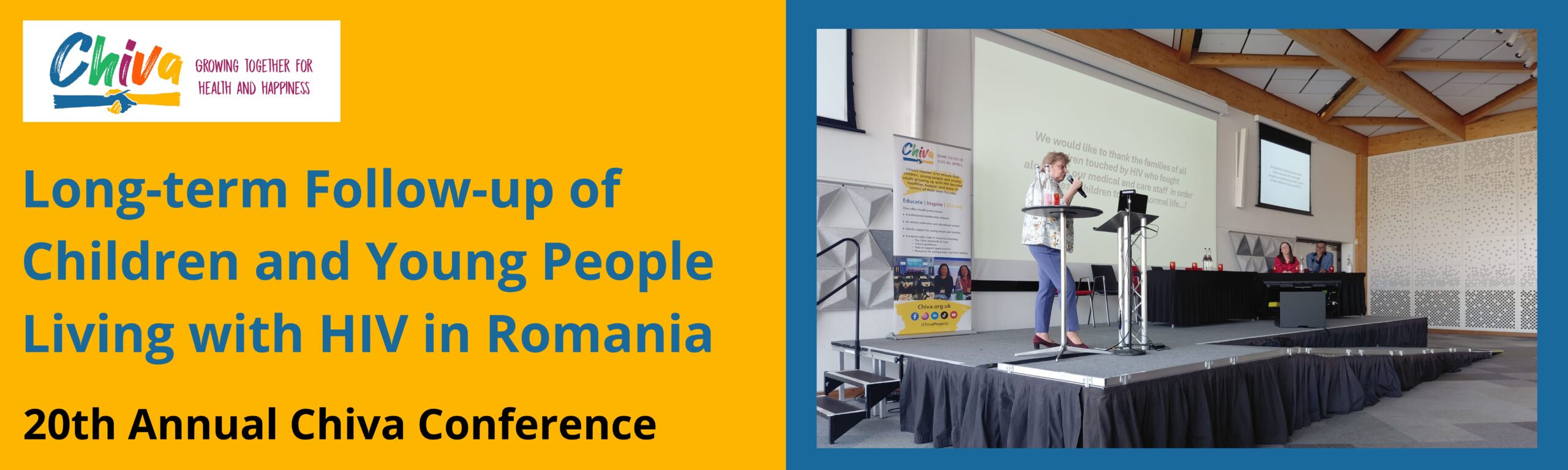
Long-term Follow-up of Children and Young People Living with HIV in Romania
Dr Mariana Mărdărescu, Consultant in Infectious Diseases and Coordinator of Compartment for Monitoring and Evaluation of HIV/AIDS Data in Romania, spoke at the Chiva Conference on Friday 13 March.
Dr Mărdărescu plotted the history of the HIV epidemic in Romania which saw unprecedented rates of children living with HIV acquired in early life from the late 1980s. Between 1989 – 1990 there were an estimated 10,000 children living with HIV, thought to be a result of unsterilised syringes used in medical treatment, particularly in orphanages.
Most of the children were cared for in paediatric HIV wards in hospitals but treatment with ART was difficult during the early 1990s, especially due to the lack of specific medication for young children. Sadly, 1090 children developed AIDS during that period.
During the same period, the rate of HIV in adults was low, but significantly increased in the years following this.
The cases of HIV affecting children were identified as the F subtype of HIV, and this was not found anywhere else in Europe, which experienced cases of subtype A and B.
Between 1990-2001, steps were taken to define a national HIV programme and to obtain funding for treatment for people living with HIV of all ages. Romania was among the first countries in the world to provide free universal access to HIV medication.
Between 2001-2002, Romania became a member of the UNAIDS Global Initiative for increased access to ART, introduced legislation to prevent the spread of HIV and protect people living with HIV. Since 2013, Romania has followed EACS, WHO and PENTA guidelines.
Overall, there is a decreasing trend in new HIV diagnosis in Romania owing to this notable progress in HIV care. Cases of perinatally acquired HIV remain stable at less than 2% of all cases per year. Romania is progressing towards the UNAIDS 95-95-95 targets. Some patients living in other countries in Europe, UK still travel back to Romania for treatment.
Issues affecting the thousands of adults from the cohort of children who grew up living with non-vertically acquired HIV were also highlighted, such as reduced treatment options for long term survivors of HIV who have received multiple lines of ART. The transition from paediatric to adult HIV care which has proved a difficult time in terms of adherence.
National policies now aim to expand long-acting therapy options, focus on adherence, eliminate stigma and continue to invest in targeted awareness raising around HIV testing, U=U and PrEP.
Critical reviewers: Chiva staff member & Nomsa Sibanda, Paediatric Support Worker, Heartlands Hospital, Birmingham
