The New HIV Treatment, Prevention and Research Funding Environment: Impact on the UK
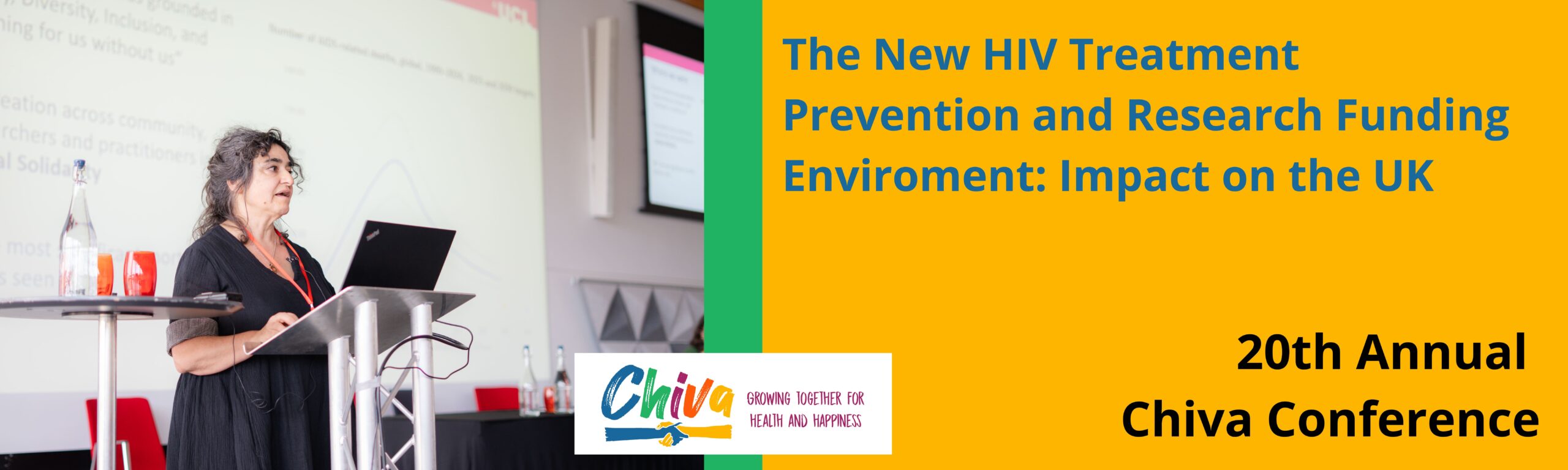
A powerful and inspiring talk to conclude the 20th Annual Chiva Conference on Friday 13 March 2026 was presented by Maryam Shahmanesh, Professor of Global Health, University College London, and Director of Implementation Science at Africa Health Research Institute (AHRI) in South Africa.
Professor Shahmanesh passionately spoke about global health and the changes that we have seen over the past few years. She reminded us that the HIV response has been one of the greatest public health successes of our generation and this was because of the way that the HIV community came together.
We saw some data regarding HIV prevention and whilst this has not been as successful as we would have liked, funding cuts have impacted this even more, so we are now nowhere near elimination. Lenacapavir offered significant hope in the work towards ending the epidemic however challenges are around access.
We were reminded of the removal of US aid a year ago which led to a great degree of chaos and uncertainty for many, as clinics were closed overnight and people were expected to seek alternative care. In South Africa alone, this is an expected additional 150,000-295,000 new HIV infections and 56,000-65,000 AIDS-related deaths between 2025 and 2028.
But these funding cuts are not only from the USA, and their impact is far reaching.
The UK has also cut its funding to the global research fund by 60% and remaining global grants are now hugely competitive. Prof Shahmanesh describes what’s happening in the US as an assault on science, academic freedom, community and civil society.
So why does it matter to the UK?
“Infections don’t have borders and these ideologies also don’t have borders”, said Prof Shahmanesh and closing our eyes to this will halt scientific advances in HIV globally and will impact our ability to improve our HIV services. We are all faced with a world where there is focus on war expenditure over saving lives. We heard three case studies: self-testing; PrEP and the relationship between STI testing and HIV prevention, which have been carried out overseas and the benefits of which have been seen in the UK.
The session ended with an empowering message to all – we must stand in solidarity and not watch silently. We must advocate for reduction in drug costs and that our taxes should not fuel wars but instead save lives. The initial HIV response was not a chance occurrence – the HIV community has done it before, and we can do it again!
Critical Reviewer: Baldip Kaur, Advanced Clinical Pharmacist, Birmingham Heartlands Hospital
