
Ageing with Perinatally Acquired HIV: A Global and UK Perspective
The global picture
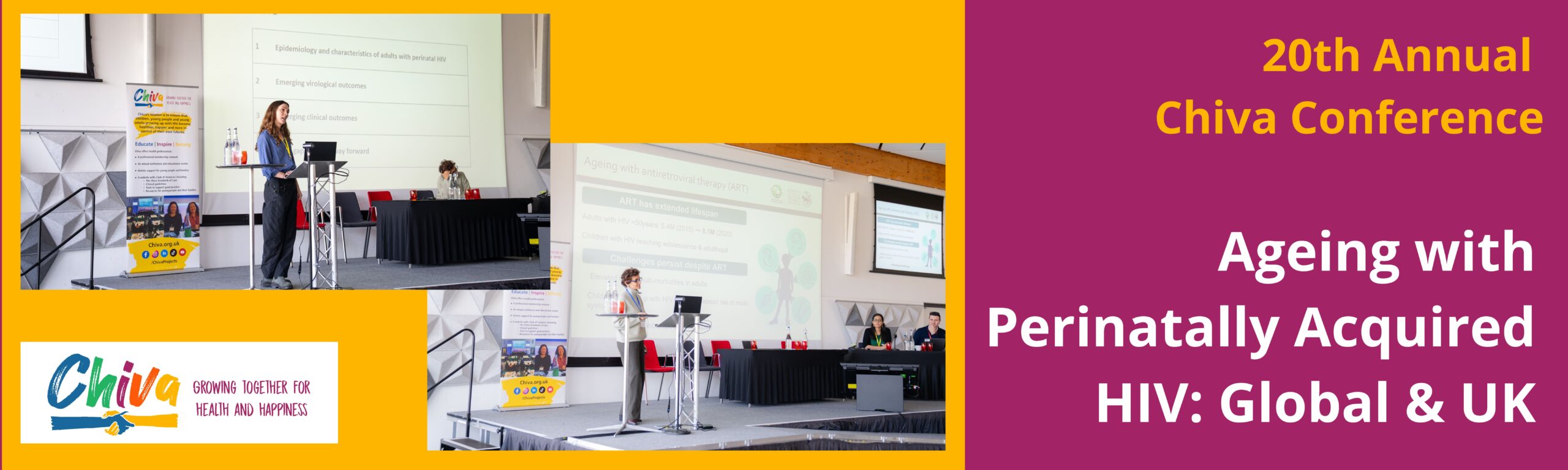
At the 20th Annual Chiva Conference on Friday 13 March 2026, Prof Rashida Abbas Ferrand, Physician and Epidemiologist at the London School of Hygiene & Tropical Medicine, talked about how the HIV pandemic is ageing. She started by celebrating the success of managing children living with HIV in the past three decades. Seeing them mature into adolescence and adulthood is truly remarkable.
Whilst we are recognising multi-morbidities in adults, it is important to be aware that children growing up with HIV also have an increased risk of multi-system morbidities which in some cases can decrease their health span.
We saw data from the Cape Town Adolescent Antiretroviral Cohort (CTAAC) in South Africa which showed that the proportion of children with single, dual and multisystem comorbidities were higher in those living with HIV, even in the era of ART than those who are HIV negative. The most common of these are cardiac, lung and neurocognitive disease.
The cohort showed that whilst the role of atherosclerosis in HIV is well known, there is now evidence of an increase in fibrosis of the heart, and this pathology needs to be understood better.
HIV was historically associated with interstitial lung disease, however the African cohort showed more small airway disease with people having reduced lung function. This is difficult to identify as it is sometimes considered their baseline or presumed to be TB.
Growth failure is another aspect which has been associated with increased mortality, delayed physical and cognitive development and poor educational attainment.
Impaired musculoskeletal development was also seen with pubertal delay and poor linear growth. The Collaborative Initiative for Paediatric HIV Education and Research (CIPHER) study showed that this was more prevalent in the global south than the global north.
We also saw that neurocognitive function in adolescents, even in the ART era, is persistently different to their HIV negative counterparts, with reduced functional outcomes such as paying attention, difficulties learning new things, forgetting and being more than one grade behind in education. This is hugely impactful on the lives of these children and is important in informing our practices going forward.
This poses the question, ‘what should we screen for’ and we don’t have the answers yet. Dr Ferrand is involved in a project in South Africa which aims to understand the biological process of ageing at a cellular level in the hope that this will give us a unifying method of screening for comorbidities.
She summarised by reminding us that we have increased lifespan and now we need to improve health span for these young adults and invited the audience to join her research in understanding the natural history of comorbidities and how we can screen for and manage these.
UK focus
Dr Merle Henderson, Clinical Research Fellow in HIV at Imperial College London followed Prof Abbas’ talk and began by highlighting that, while treatment advances have improved outcomes, new paediatric cases persist, with 120,000 diagnoses globally in children aged 0–14 in 2024, mostly in low- and middle-income countries.
In the UK, most people living with HIV are now over 20, highlighting the success of ART. However, it is becoming apparent that there are biological differences between those who survived childhood before paediatric ART and those who were treated in early childhood, largely due to prolonged viraemia and exposure to older, more toxic regimens.
Adults with perinatally acquired HIV have lower viral suppression rates and higher drug resistance than peers who acquired HIV later in life, partly due to earlier reliance on NNRTIs. This limits access to newer treatments such as long-acting injectables.
Sadly, we are still seeing higher rates of hospitalisation and HIV related deaths in those adults with perinatally acquired HIV compared to their age matched peers who acquired HIV later in life.
Dr Henderson proceeded to discuss the risk of non-HIV related complications in those with perinatally acquired HIV. There is a higher risk of metabolic, cardiovascular and mental health disorders in people living with perinatally acquired HIV compared to their negative counterparts. It is important to ensure that these people get early metabolic and cardiovascular screening and mental health support. Ageing is now a key focus in HIV care.
Reassuringly, modern day ART has meant that there are very few cases of chronic kidney disease in those with perinatally acquired HIV, however a decline in renal function was seen in these individuals suggesting that monitoring remains important.
Chronic lung disease also remains a concern, particularly in low- and middle-income settings, however this is becoming increasingly relevant to our practice as we see more migrant populations who present with respiratory symptoms.
Dr Henderson summarised the session by talking about data gaps. It remains unclear whether these subclinical abnormalities will develop into clinical disease, how outcomes will differ in those treated from infancy with modern ART, and whether early treatment prevents comorbidities.
We left the session with some actions for the future – to support linking datasets from childhood all the way through to adolescence and adulthood to enable us to learn about the evolution of health and early intervention whilst continuing to focus on early diagnosis and maintenance of viral suppression throughout the different stages of life.
Critical Reviewer: Baldip Kaur, Advanced Clinical Pharmacist, Birmingham Heartlands Hospital
