Workshops Address Supporting Psychosocial Wellbeing in Clinic, Naming HIV to Young Children and Supporting Breastfeeding
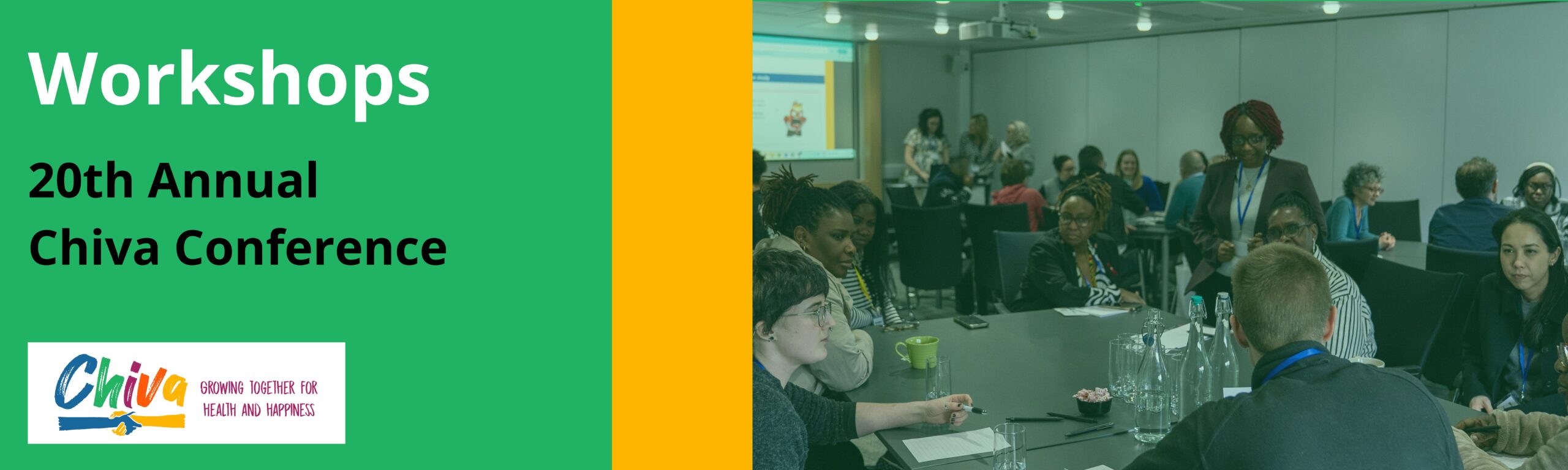
The 20th Annual Chiva Conference on Friday 13 March 2026 featured three insightful workshops that explored different aspects of living with HIV.
Katie Warburton, Senior Lecturer in Children and Young People’s Nursing at the University of Central Lancashire and Emanuela Ackon, Specialist Support Officer at Chiva ran a workshop on talking to younger children about their HIV.
The workshop began by recognising the challenges around talking to children about their HIV that are felt by parents and professionals. Barriers identified in the room included: parental fear; lack of confidence among professionals; impacts of HIV stigma and lack of resources to support this work.
Research findings shared by Katie show that the advantages of talking to children openly about HIV from a young age include: an indication that this can lead to improved adherence; improved emotional wellbeing and some data suggests improved life expectancy.
Participants took part in an activity to explore the challenges further, including what children feel after they have been told and how they felt before, reflecting on the worry, fear and confusion.
An identified problem is that guidelines around naming HIV to children are still not being followed – and messages from children are clear; they would have liked to know about their diagnosis at an early age.
Chiva Youth Committee members in the room advised that using proper terms from the start makes it easier to grow up understanding these. A young adult reflected, “My parents were never going to be ready but once I was told – very late – it was easier at home, we could have conversations”.
Key takeaway points were:
- Professionals need to lead the process and be aware of not contributing to self-stigma by avoiding talking about HIV. This in turn helps to lift the significant parental burden of worry and fear about telling their child about their HIV.
- It’s important to think about language and be careful with use of metaphors as children are concrete thinkers. Avoid terms such as battles or bugs.
- Explaining HIV with visual aids is helpful.
Recently developed Chiva resources were shared including: crochet plushies that represent viruses, medication and CD4 cells; a storybook Grace, Gigi and HIV, and soon to be produced card set to accompany the book.
Case experiences were shared by Chiva Staff member Emanuela of work she has done using Chiva’s HIV crochet set to name HIV to young children. Emanuela explained how naming work is completed over five stages, she starts with a one-to-one session with parents to explain the process, reassure them and address any concerns.
Some delegates asked how to create the crochet plushies. Chiva can send the pattern to anyone wishing to create their own. Email [email protected].
Rebecca Ferguson, Infectious Diseases Clinical Nurse Specialist at St Mary’s Hospital and Lisa Lang, Specialist Support Officer at Chiva ran a workshop on exploring how psycho-social support can be integrated into HIV clinical care.
The Gap: “We provide medical care, but trauma often presents patients from engaging with it”.
The goal of this workshop was to practice effective communication on difficult topics, recognise how trauma “masks” itself in young people and identify core questions to ask young people. Useful suggestions shared included:
- Home and environment
- Education and Employment
- Activities
- Drugs & Alcohol
- Sexuality
- Suicide / Depression (Mood)
Four groups were each given a case study and asked to role play how they would support the young person.
This exercise demonstrated that patients may present with trauma responses that mask underlying risk. For example: a withdrawn young person expressing hopelessness about relationships (in trauma state of freeze with dissociation); a “perfect” patient concealing substance use (fawn response to avoid getting into trouble); a defensive or angry individual deflecting from an unsafe home environment (fight response where aggression is used to ‘shield the door’); or a hypervigilant patient fearful of sharing with others what’s really going on, and struggling to trust.
Clinical approaches should remain trauma-informed – gently exploring mood and safeguarding (including relationships and online safety), maintaining a non-judgemental and patient-led style, and avoiding confrontation.
Building trust through consistency, confidentiality, and allowing sufficient time to talk is key, alongside using indirect questioning where needed, revisiting concerns sensitively, and recognising behaviour as a potential indicator of risk. There should be engagement with the multi-disciplinary team (MDT) and wider support services, including outreach workers where possible.
Alex Thomas-Leech, Specialist Midwife, HIV and Screening at the Manchester Foundation Trust ran a workshop on best practice in supporting breastfeeding.
The workshop provided delegates with an up-to-date overview of supporting infant feeding in women living with HIV, balancing clinical safety and patient choice. It outlined current UK guidance, including the 2025 BHIVA recommendations, which continue to advise exclusive formula feeding as the safest option to eliminate transmission risk, while also supporting breastfeeding in specific circumstances through informed, shared decision-making.
The session explored the clinical requirements for safer breastfeeding, such as: sustained undetectable viral load; strong adherence to antiretroviral therapy; exclusive breastfeeding for six months and close monitoring of both mother and infant.
The workshop also compared UK guidance with WHO recommendations, which advises that breastfeeding can continue for longer than six months, recognising that in some countries or regions formula feeding may increase infant mortality from diarrhoea, pneumonia, and malnutrition.
Participants learned how HIV transmission can occur during breastfeeding, including factors such as increased viral load, mixed feeding, and breast health complications such as mastitis. The workshop also addresses the social, cultural, and personal reasons why women may choose to breastfeed, alongside barriers such as stigma, cost of formula milk, and access to support.
Drawing on case studies and experiences the workshop emphasised the importance of multidisciplinary care, effective communication, and culturally sensitive, non-judgmental support and addressing inequalities in access to services.
The session concluded by reinforcing the importance of empowering women to make informed choices about infant feeding, encouraging healthcare professionals to remain up-to-date with evolving evidence, and promoting compassionate, person-centred care for families living with HIV.
Critical Reviewers: Chiva staff members
