
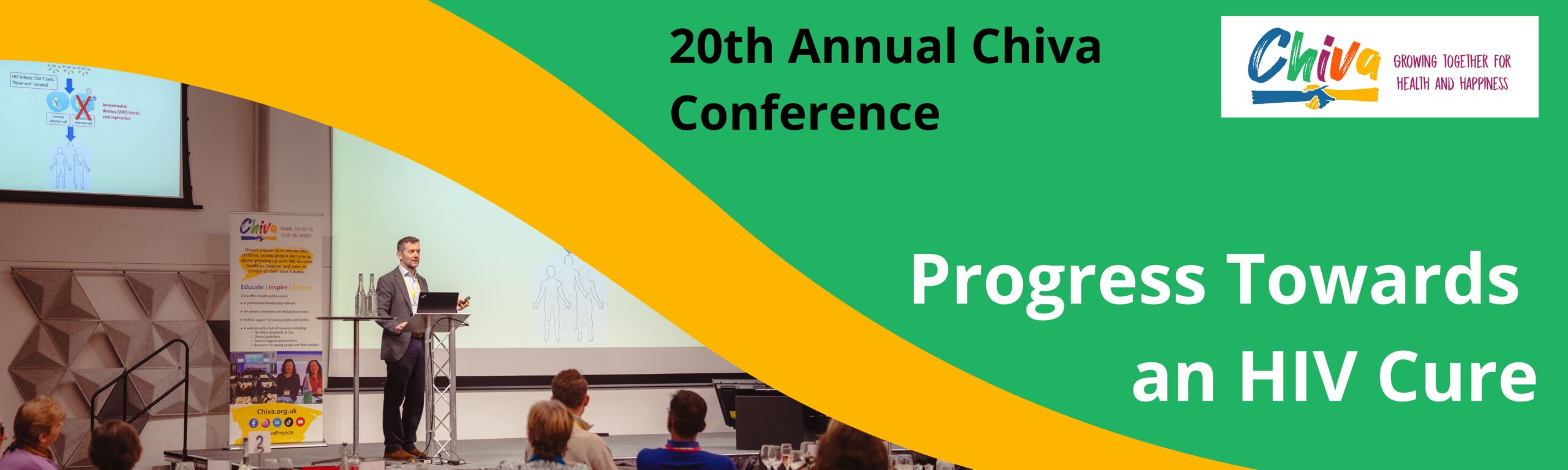
Progress Toward an HIV Cure
John Frater, Professor of Infectious Diseases and Honorary Consultant Physician at the University of Oxford, opened the 20th Annual Chiva Conference on Thursday 12 March 2026 with a comprehensive and thought-provoking overview of global progress towards an HIV cure. Prof Frater charted the journey from the earliest days of the epidemic to cutting-edge immunological interventions now entering clinical trials.
He began by reflecting on the human and community dimensions of HIV, including the CHERUB HIV Garden at the RHS Chelsea Flower Show launched in 2018, which symbolised the lived experiences of young people with HIV and the importance of addressing stigma alongside biomedical advances.
Setting the epidemiological context, Professor Frater highlighted the continuing global burden of HIV, with tens of millions still living with the virus despite the transformative success of antiretroviral therapy (ART).
While ART has dramatically improved life expectancy, the central barrier to cure remains the HIV reservoir – latently infected CD4 T cells that persist despite viral suppression. The presentation explored the “quality” and “quantity” of this reservoir, emphasising its heterogeneity, clonal expansion, and preferential viral integration sites that promote cell survival.
Although a small number of individuals have been cured through stem cell transplantation, these cases serve only as proof of principle and are not scalable solutions.
Professor Frater then focused on the reservoir as an immunological target, asking fundamental questions about viral persistence, immune clearance, and whether natural immune responses can be enhanced.
A major theme was the emerging role of broadly neutralising antibodies (bNAbs), which target multiple conserved sites on the HIV envelope and have demonstrated potent, broad activity across HIV-1 subtypes. Early studies showed partial viral suppression, but more recent trials have demonstrated substantial delays in viral rebound following analytical treatment interruption (ATI).
The RIO trial was presented as a landmark study in this field. In people treated during early HIV infection, long-acting bNAbs (3BNC117-LS and 10-1074-LS) significantly delayed viral rebound compared with placebo, with a proportion of participants remaining off ART beyond 96 weeks. Importantly, distinct rebound phenotypes emerged, suggesting biological differences in post-treatment control. Immunological analyses provided evidence of enhanced HIV-specific T-cell responses following bNAb therapy, raising the possibility of a “vaccinal effect,” whereby antibodies not only neutralise virus but also stimulate durable cellular immunity.
The talk concluded by outlining future directions, including combination approaches that pair bNAbs with T-cell vaccines, gene-based strategies, or immune modulation. New studies such as AbVaxNew aim to dissect these mechanisms further. Professor Frater emphasised that while a universally scalable cure remains elusive, sustained remission is now an achievable and measurable goal – provided continued advocacy, funding, and community engagement remain central to HIV cure research.
Critical Reviewer: Dr Srini Bandi, Consultant Paediatrician and Head of Service, Leicester Children’s Hospital
