
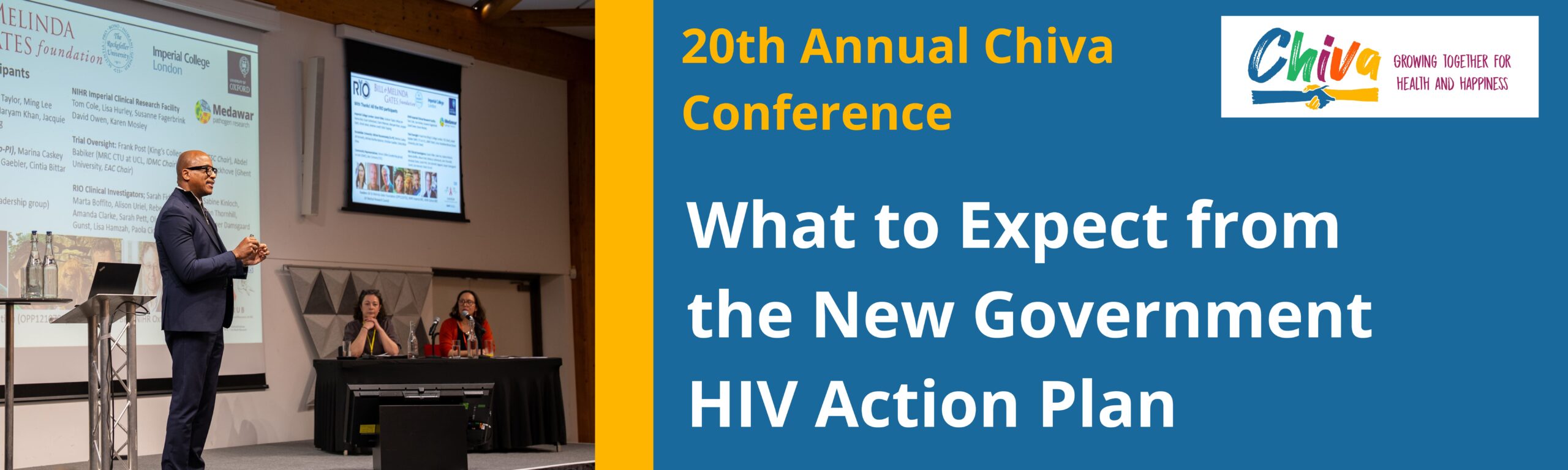
What to Expect from the HIV Action Plan
We were delighted to be joined by Professor Kevin Fenton who presented the Government’s HIV Action Plan during a special evening celebrating 20 years of the Chiva conference, on Thursday 12 March 2026.
Professor Fenton is Regional Director at the Office for Health Improvement and Disparities (London) and Regional Director of Public Health, NHS London.
To kick start, Professor Fenton presented a scatter plot to analyse the rise in new HIV diagnosis between 2020-2023 during the Covid-19 pandemic when there was less testing, and a fall in 2024 when testing increased.
Professor Fenton highlighted evidence that certain groups are disproportionately affected by HIV, especially white and ethnic minority GBMSM, black African heterosexual men, black African heterosexual women and all other ethnic minority heterosexual adults.
There is notable variation between the five groups in the proportion of people attending sexual health services and accessing Pre-exposure prophylaxis (PrEP), with black African or other ethnic minority heterosexual men and women being less likely to access services. There are still challenges being faced today, uneven progress, late diagnosis, stigma, discrimination and structural inequalities and system pressures i.e. workforce capacity and funding alignment.
It was exciting to hear about the Government’s new HIV action Plan, which has been developed by the Department for Health and Social Care in Partnership with the UK Health Security Agency (UKHSA) and NHS England, in collaboration with other stakeholders including the voluntary sector and people living with HIV.
Professor Fenton shared the Government’s priorities:
Prevent – a new national HIV Prevention England programme backed by £4.8 million funding will focus on improving awareness of HIV prevention among at-risk groups alongside safer sex promotion, testing and education. This will include a focus on increasing the proportion of heterosexuals and black and ethnic minority populations offered PrEP by sexual health services. There was also a commitment to funding for formula milk and sterilising equipment for infants of women living with HIV to prevent vertical transmission.
Test – testing for HIV is crucial in saving lives and preventing new transmissions by identifying those that are undiagnosed and linking them with treatment. The Government will invest £108 million to deliver opt out HIV testing in emergency departments (ED) in high HIV prevalence areas. There are also plans to expand digital provision of HIV testing, by trialling HIV home testing, in the NHS App.
Treat – the Government will invest £9 million in the first ever national retention and re-engagement initiative, working with local NHS services, voluntary community sector organisations and industry to increase the number of patients re-engaged in their HIV care.
Thrive – Many people living with HIV continue to face stigma and discrimination which can affect their wellbeing and access to care. The Government will: commission new anti-HIV stigma programmes across NHS Trusts participating in the ED opt-out programme; ensure health and social care staff receive training on HIV awareness, stigma reduction and inclusive care by embedding HIV education; ensure the needs of women living with HIV are addressed in future work and the role of care for menopausal women living with HIV is included in women’s health hubs best practice.
Collaborate – the Government will collaborate with local partners and engage with communities to identify service gaps and priorities, to inform the development of local HIV plans across the country. There will be continued support for global health organisations at the core of the international response to HIV and AIDS.
Professor Fenton concluded that we have the tools, the evidence and the partnerships to end new transmission and ensure inclusive health care for all.
A question was raised about the school curriculum, that there is not enough information delivered about HIV and what is shared is often misleading or out of date. Dr Fenton agreed to the problems faced in the curriculum and proposed that the Minister for Education work with young people so that they can state what they want included in the curriculum.
Critical reviewer: Nomsa Sibanda, Paediatric Support Worker, Heartlands Hospital, Birmingham
