
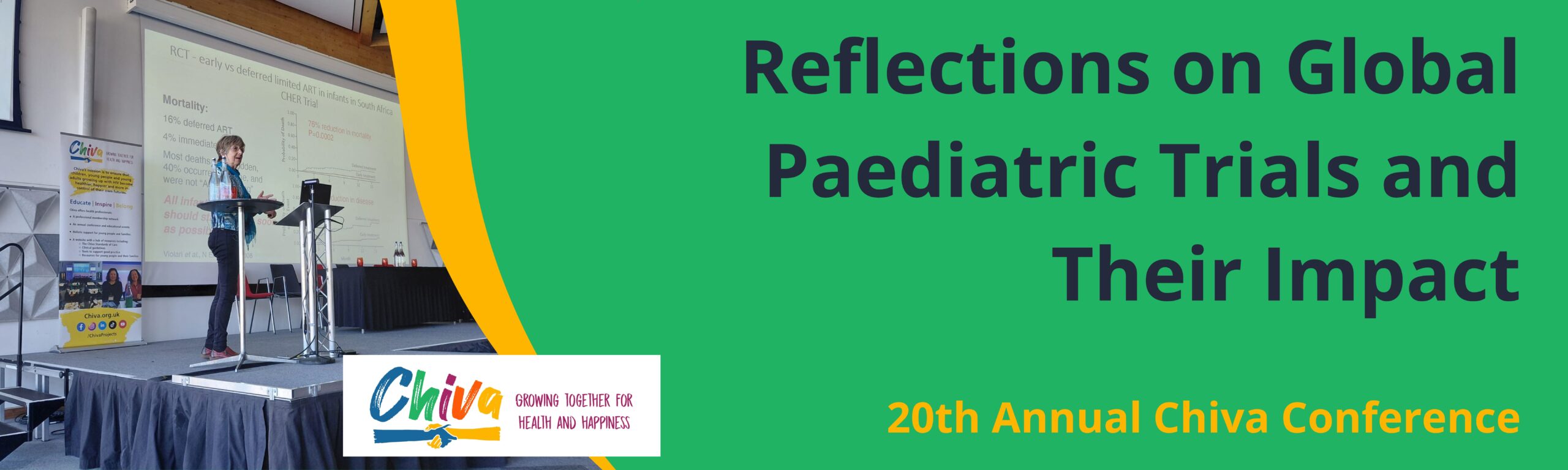
Reflections on Global Paediatric HIV Trials and Their Impact
A presentation from Professor Diana Gibb, Paediatrician and Professor in Epidemiology and Clinical Trials at the Medical Research Council, University College London, traced the remarkable evolution of paediatric HIV care over the past four decades, highlighting how global clinical trials have transformed prevention, treatment, and long-term outcomes for children and adolescents living with HIV.
While major progress has been achieved, significant gaps remain – particularly for children, who continue to lag behind adults in diagnosis, treatment coverage, and viral suppression, with the greatest burden borne by low- and middle-income countries.
Early landmark studies such as PACTG 076 established the principle of “treatment as prevention,” leading to dramatic reductions in vertical transmission and shaping global prevention strategies, including the adoption of lifelong ART (Option B+). The CHER trial was pivotal in demonstrating that immediate ART in infants substantially reduces mortality and disease progression, driving rapid changes in international guidelines and clinical practice.
Subsequent trials focused on accelerating access to effective, child-friendly antiretroviral regimens and simplifying lifelong treatment. The ODYSSEY trial was a major breakthrough, showing the superiority of dolutegravir-based therapy across age groups, weight bands, and treatment histories. Its findings directly informed WHO recommendations and enabled the rapid global roll-out of affordable paediatric dolutegravir formulations.
CHAPAS-4 further refined second-line therapy, identifying darunavir/ritonavir and tenofovir alafenamide as optimal options for children experiencing treatment failure. More recently, the D3 trial demonstrated that switching virologically suppressed children to dual therapy (DTG/3TC) is safe, effective, acceptable, and cost-saving.
Looking ahead, the presentation highlighted emerging innovations including long-acting injectable therapies, which could transform both treatment and prevention, particularly for adolescents. Crucially, it emphasised that antiretrovirals alone are not enough: improving outcomes for children and young people living with HIV requires holistic, adolescent-friendly models of care that integrate psychosocial support, mental health services, and community engagement.
Together, these advances underline how sustained scientific innovation, equitable access, and person-centred care can continue to reshape the future of paediatric HIV.
Critical Reviewer: Dr Srini Bandi, Consultant Paediatrician and Head of Service, Leicester Children’s Hospital
